

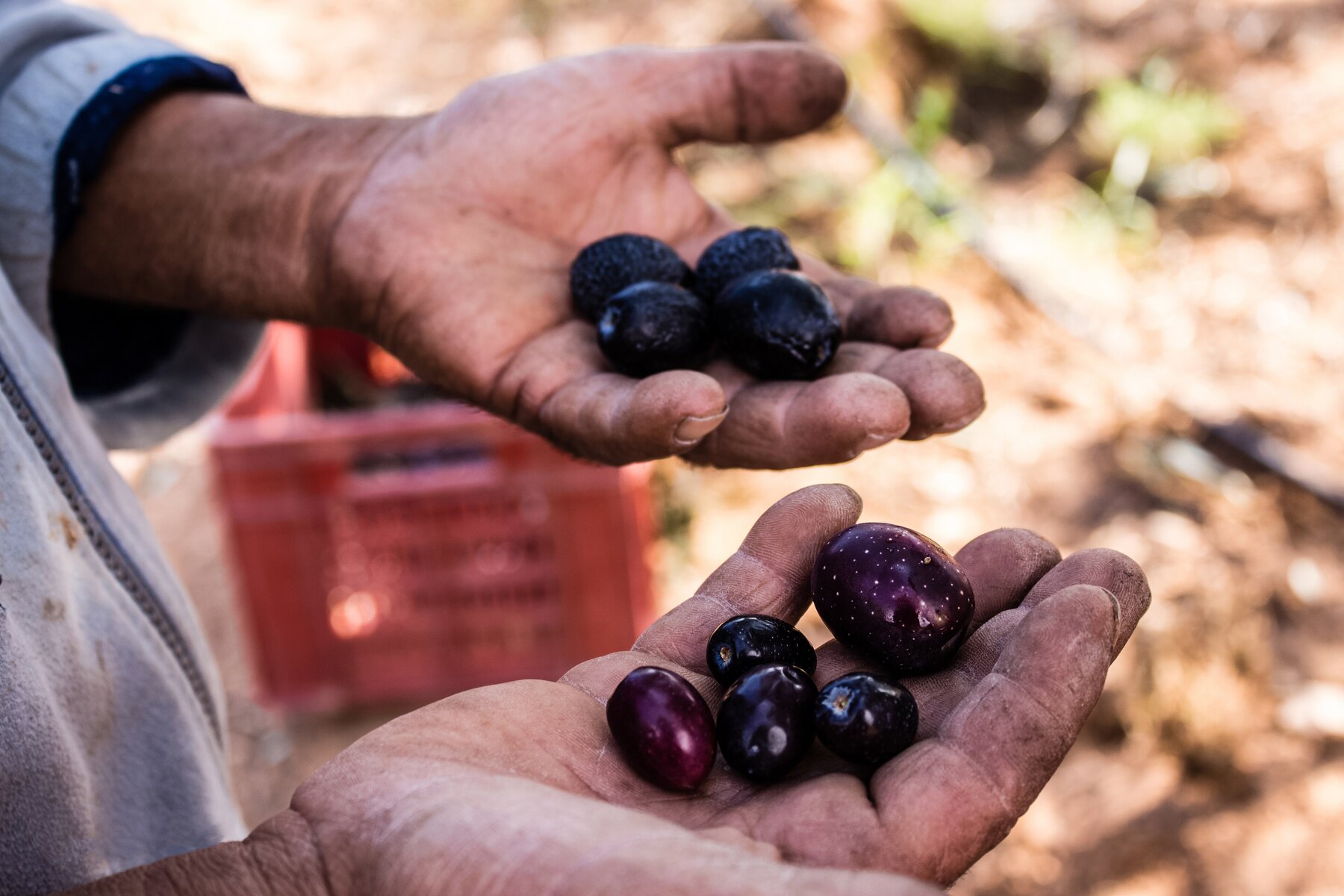
Olive harvest in Tunisia. Archive photograph from October 2017. Photo: Karama Kolsi / Wikimedia Commons, CC BY-SA 4.0, resized.

Tunisia's producers reaffirm a sharp production decline, Italy's first new-season oil attracts a premium, and Portugal expects more output. The early-November market is moving at different speeds.
The Mediterranean olive oil market is entering November with no single price or production story. A larger European crop is widely expected, yet Tunisia anticipates considerably less oil than last season, while Italian buyers are paying a premium for the small volumes of new-season extra virgin oil already available. The distinction between a season's expected total production and the oil currently offered for sale remains important.
What's happening this week
Tunisia maintains its lower harvest estimate
On 2 November, Mouldi Ramdhani of Tunisia's National Olive Oil Council reaffirmed an industry projection of 300,000 tonnes for 2026/27, compared with around 500,000 tonnes in the previous season. The 40% reduction is still a forecast, not an observed harvest result, and the estimate was first raised in September. Producers say rain-fed groves are under particular pressure, while access to finance and plant-health problems add to the difficulty of the new campaign.
Tunisia exported 399,000 tonnes in the previous campaign by the end of September, according to figures presented to the government in October. That trade performance underlines the country's importance to international supply, but should not be treated as a forecast of exports this season. A smaller crop could affect export availability; the outcome will also depend on domestic consumption, carry-over stocks and commercial decisions. Source: Webmanagercenter, 2 November.
Italy: a premium for the first oil, not yet a general recovery
A 3 November report from Teatro Naturale described limited new-season production in Puglia and Calabria, with some early lots already committed under contracts agreed months ago. In Bari, an ISMEA reference dated 26 October stood at 5.05€/kg for new oil; the local chamber of commerce indicated a 5.00–5.25€/kg range, while Foggia was reported at 4.80€/kg. These are dated local indications, not a uniform Italian national price or a benchmark for all new-crop contracts.
The premium reflects early availability as much as the market's view of the eventual harvest. When larger volumes reach mills, buyers will be able to compare more representative offers, quality specifications and delivery dates. The Italian report also pointed to Portuguese oil becoming available at 3.30–3.60€/kg, illustrating the competition between origins without making those quotations directly interchangeable. Source: Teatro Naturale, 3 November.
Portugal expects more oil
Portugal's Casa do Azeite said on 2 November that the first signs point to production of around 190,000 tonnes, above the preceding campaign. Its secretary-general, Mariana Matos, also reported encouraging early extraction yields while cautioning that price movements will depend on whether output expectations are confirmed and how consumption develops. Higher production does not translate automatically into an immediate fall in retail prices.
The latest International Olive Council estimates, released on 29 October, put European Union output near 2.4 million tonnes: 1.6 million in Spain, 300,000 in Greece, 280,000 in Italy and 195,000 in Portugal. All remain preliminary estimates, and the Portuguese industry figure is broadly consistent with the IOC's projection. Sources: Executive Digest, 2 November; IOC, 29 October.
Spain's closing balance shows the scale of trade
Figures reviewed on 3 November for Spain's completed 2025/26 season included about 357,000 tonnes in ending stocks, 1.48 million tonnes marketed and 245,500 tonnes imported, the highest import volume in four years. Around 65% of marketed oil went abroad. These figures describe the outgoing campaign, not new-crop transactions, but they show why production alone is an incomplete measure of availability: Spain can be an exporter on a very large scale while remaining a major importer. Source: Canal Extremadura, 3 November.
What the contrast means
The early-November contrast is therefore between expected abundance across much of the EU, a potentially smaller Tunisian crop and tight immediate availability of some Italian new oil. It is too early to infer a common Mediterranean price direction from these signals. Harvest yields, confirmed transactions and the pace at which fresh oil reaches buyers will provide the next useful test.