

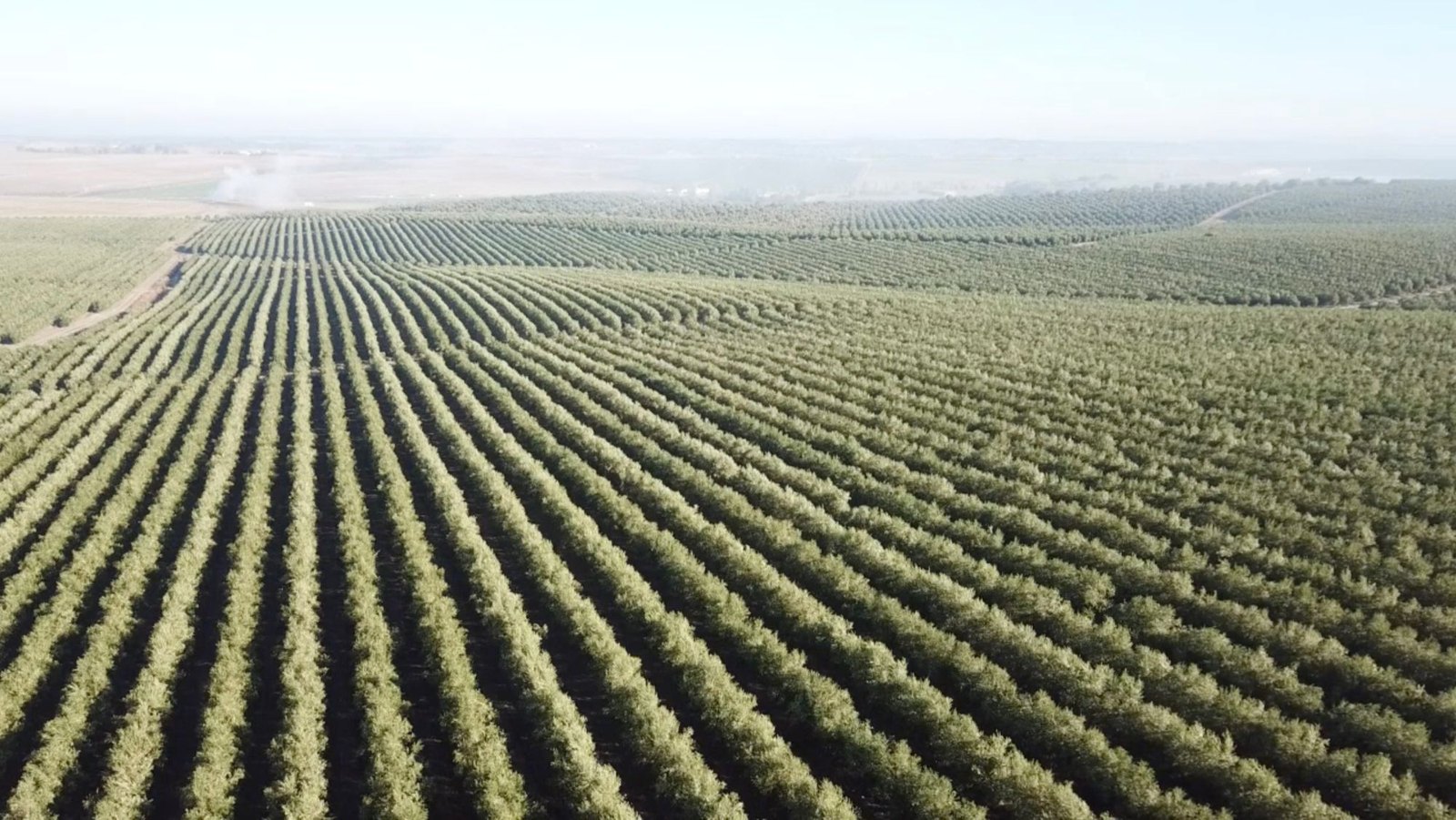
There are good reasons why the same olive varieties keep appearing in new plantations. Growers want trees that suit their harvesting equipment, begin producing early and have a reasonably predictable record. Where labour is costly and a substantial investment has to be recovered, choosing a familiar variety can be a sensible decision. Repeated across an industry, however, those choices raise a broader question about the varieties being left behind, and whether their disappearance could eventually carry a cost that today's planting decisions fail to capture.
The European Commission's account of the GEN4OLIVE project offers a measure of the gap: more than 1,200 olive varieties exist worldwide, yet large commercial plantations are estimated to rely on only around 5% of that diversity. Much of the remainder survives in established groves and conservation collections. The question is how much of it will continue to be planted, studied and available to growers as the industry expands.
The case for familiar varieties
The constraints are particularly clear in hedgerow systems. Trees must be managed within a restricted space and remain suitable for continuous mechanical harvesting. Varieties such as Arbequina, Arbosana and Koroneiki have become established choices in these systems, alongside newer selections developed through breeding programmes. A variety that produces excellent oil may still be an awkward commercial proposition if its growth makes the grove harder to manage or its production pattern delays the return on investment. Those constraints deserve to be taken seriously by anyone arguing for greater diversity.
Familiarity also has an economic value. A variety supported by experienced nurseries and established management practices gives growers a more informed basis for their decisions. As more people plant it, more experience becomes available, strengthening its position in the next round of investment. A lesser-known alternative faces the opposite problem. Without enough planting, there is little commercial evidence of its performance; without that evidence, persuading someone to plant it becomes harder. A promising variety can remain marginal for reasons that have little to do with the quality of its oil.
Performance depends on place
Yet experience in one place does not settle the question everywhere. Research on Spanish and Greek cultivars planted in northern Tunisia found that the interaction between variety and growing environment strongly influenced many of the oil characteristics measured. The authors stressed the need to test varieties under the conditions in which they would actually be cultivated. For growers, this makes local trials particularly valuable: the performance that justifies an investment elsewhere needs to be examined against the water, soils and temperatures of the proposed site.
The wider concern arises when many growers share exposure to the same weaknesses. Where a small group of varieties responds similarly to a particular disease or climatic stress, the consequences can extend across numerous holdings. Diversity can provide alternatives, although those alternatives need to be tested. A local variety's long history is a reason to investigate its characteristics, rather than sufficient evidence that it will outperform an established commercial choice.
When a variety stops being planted
For some lesser-used varieties, there is already a more immediate problem. Once growers stop planting them, their survival increasingly depends on the trees that remain. Replacement of an old grove, disease or abandonment can then remove a significant part of a small population. A 2024 study of Croatian olive germplasm described Jeruzalemka and Kamasa among local varieties represented in very small numbers and threatened with extinction. The risk therefore extends beyond a gradual reduction in commercial choice; for particular varieties, the genetic material itself may be lost.
Because olive trees can live for so long, a variety can disappear from new investment well before the decline becomes obvious in the landscape. Old trees may continue producing for decades while almost nobody plants their replacements. Continued presence in a region is therefore an incomplete measure of a variety's prospects.
Conservation collections offer essential protection. The International Olive Council supports a network of germplasm banks that maintain living trees, identify varieties and make their characteristics available for research and breeding. Preserving a variety in a collection can prevent its complete loss even after it has largely disappeared from commercial cultivation. Keeping it in production serves an additional purpose: growers continue to build practical knowledge about its behaviour, and its oil retains a route to the market. Both forms of conservation matter, but they require different kinds of support.
Keeping varieties commercially viable
The commercial difficulty is that growers cannot pay their bills with the possible future value of genetic diversity. A variety with higher cultivation costs needs sufficient compensation through its output or selling price. Distinctive flavour or regional identity may help, but a premium only becomes real when a buyer is prepared to pay it consistently. A producer selling bulk oil may have little opportunity to recover the extra cost. Selling a bottled monovarietal oil creates more scope to explain the difference, while bringing the expense of building a brand and finding customers. Even then, the producer needs a market large enough to absorb the crop, rather than a small number of enthusiasts willing to buy a few exceptional bottles.
This is where preservation becomes a question of how the business is organised. Longer-term purchasing commitments could give growers a reason to maintain a variety that would otherwise be replaced. Shared trials could reduce the cost of finding out whether it performs well. Better access to planting material would make a promising result easier to turn into an actual grove.
Keeping future choices open
Breeding provides another route. Lecciana, developed through work by the University of Bari and Agromillora, comes from a cross between Arbosana and Leccino and was developed for use in hedgerow systems. It illustrates how characteristics from different varieties can be combined to broaden the choices available to modern growers. The commercial value of a traditional variety may therefore extend beyond the oil it produces today. It may also contribute useful traits to a future variety, provided the material remains available and has been studied well enough to use.
The GEN4OLIVE project worked on precisely that gap, characterising more than 500 varieties and identifying genetic material with useful tolerance to drought, disease and other stresses. Such work takes time. Material has to be identified and evaluated before growers can make a sound investment around it. Allowing varieties to disappear before that work is done closes off possibilities whose value the industry has not yet had the chance to assess.
There is also a mismatch between who bears the cost and who receives the benefit. The saving from an easier harvest belongs to the grower who makes the investment. The benefit of preserving a rare variety may emerge years later, in a breeding programme or on a farm somewhere else. That is a strong economic argument for supporting conservation and shared research beyond what individual farms can justify. Asking growers to maintain diversity without helping establish its value leaves preservation dependent on a willingness to accept lower returns.
The pressure to make olive production more efficient will remain, and a wider choice of well-understood varieties can help growers meet it under different conditions. The trees selected today will have to perform through years of changing weather and markets. The industry has a commercial interest in making sure that varieties outside today's preferred shortlist remain available when those conditions call for a different choice.
Sources
- European Commission: Leveraging big data for better olive production (CORDIS Results in Brief on the GEN4OLIVE project, 13 February 2026: over 1,200 olive varieties worldwide, large-scale commercial plantations relying on about 5% of that diversity, over 500 varieties characterised, and genotypes with superior tolerance to disease, drought and other stresses)
- Frontiers in Plant Science: First note of QTL mapping of low vigor traits using the updated F2 'Koroneiki' linkage map of olive (Granata et al., 31 January 2025: clones of Arbequina, Arbosana and Koroneiki among the few cultivars identified as suitable for super-high-density orchards, and the newer cultivars released from breeding programmes, Lecciana among them)
- Journal of Food Biochemistry: Behavior of Super-Intensive Spanish and Greek Olive Cultivars Grown in Northern Tunisia (Allalout et al., 2011: Arbequina, Arbequina I-18, Arbosana and Koroneiki in a high-density planting; most of the oil parameters analysed were greatly influenced by the interaction between cultivar and environment, and cultivars from other environments must be properly tested before they are used)
- Horticulturae: Genotyping of Croatian Olive Germplasm with Consensus SSR Markers (Bolarić et al., 2024: Jeruzalemka and Kamasa among the Croatian varieties represented in a very small number and threatened with extinction)
- International Olive Council: Cultivated Biodiversity in the Olive Grove (World Catalogue of Olive Varieties, L. Rallo and L. Sikaoui: the IOC's Network of Germplasm Banks, collections of olive trees for the conservation, cataloguing, evaluation and free exchange of cultivated varieties, with more than 1,800 varieties in 26 banks)
- Agronomy: Lecciana, a New Low-Vigour Olive Cultivar Suitable for Super High Density Orchards and for Nutraceutical EVOO Production (Camposeo et al., 2021: obtained in 1998 from a controlled cross between Arbosana and Leccino under a research agreement between Agromillora Iberia and the University of Bari, for super-high-density orchards)