

.jpg)
Photo: Cobram Estate Olives. Used for illustrative purposes.
The company is trying to build in California what it already has in Australia: control from the grove to the supermarket shelf. FY2026 showed the industrial logic of that plan and the amount of cash it requires.
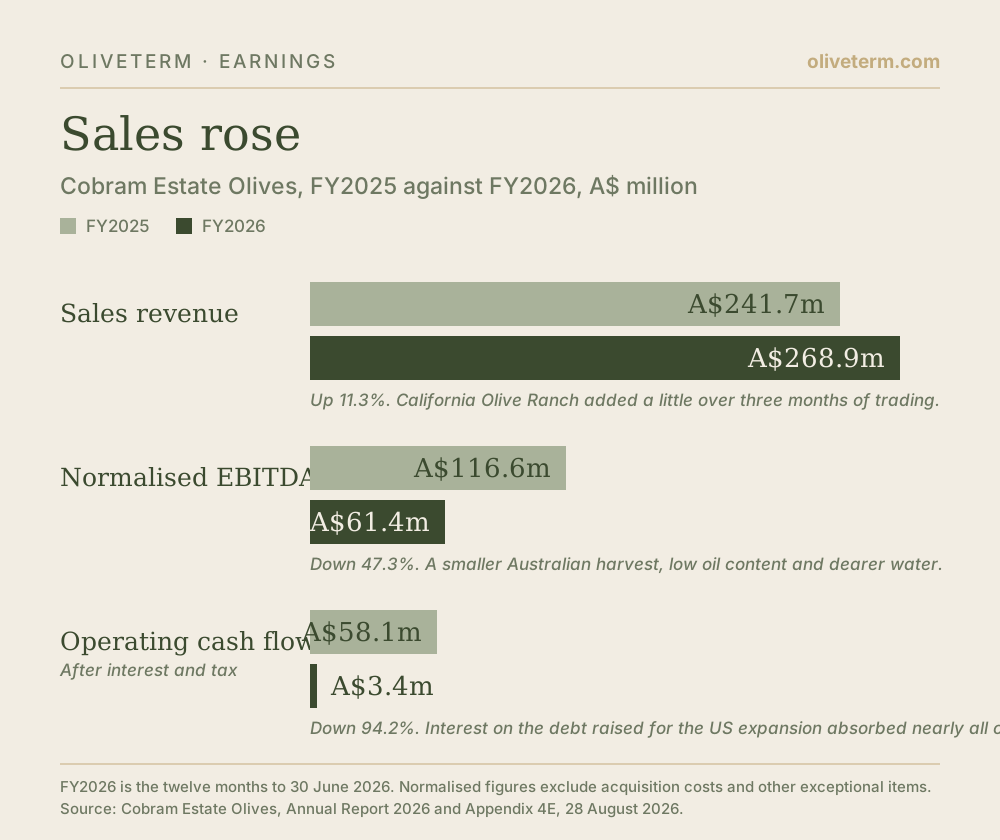
Cobram Estate Olives shares fell 14.9% to A$2.81 on 28 August after the company published its FY2026 results. Sales rose after the acquisition of California Olive Ranch, while earnings and cash generation fell because of a weaker Australian harvest and higher costs.
The larger story is Cobram's transformation from an Australian producer with a growing US operation into an integrated olive oil company on two continents. The California investment combines groves, contracted growers, mills, storage, bottling, brands and retail distribution. FY2026 caught that investment midway through the process: the company had paid for much of the expansion, while many of the new assets had yet to produce their expected income.
| Key figure | FY2026 | FY2025 | Change |
|---|---|---|---|
| Sales revenue | A$268.9m | A$241.7m | +11.3% |
| Normalised EBITDA | A$61.4m | A$116.6m | −47.3% |
| Normalised earnings before tax | A$13.0m | A$76.1m | −82.9% |
| Statutory result after tax | −A$4.2m | A$49.6m | −108.5% |
| Operating cash before interest and tax | A$47.5m | A$83.0m | −42.8% |
| Operating cash after interest and tax | A$3.4m | A$58.1m | −94.2% |
| Net debt at 30 June | A$437.3m | A$263.9m | +65.7% |
| Australian harvest | 11.1m litres | 14.2m litres | −21.7% |
FY2026 means the twelve months ended 30 June 2026. Figures are in Australian dollars unless stated otherwise.
Cobram is building the same integrated model in California that it has in Australia
Cobram's Australian business controls most stages between the tree and the consumer. It grows and harvests olives, mills the fruit, stores and bottles the oil, and sells it through the Cobram Estate and Red Island brands. This structure allows the company to earn income from agriculture, processing and branded retail rather than relying on a single stage of the chain.
The company entered California in 2014 and initially concentrated on the production side. It bought and planted groves, developed milling and storage capacity, built relationships with third-party growers and introduced the Cobram Estate brand. That created a local supply base, although the US operation still lacked a large national brand and the retail reach to match the production investment.
The California Olive Ranch (COR) acquisition fills that gap. It adds the leading brand of Californian-produced olive oil, the Lucini premium brand, private-label contracts and an established distribution network. It also brings leased groves and a large network of contracted growers. The combined business can secure fruit, mill and bottle the oil, then sell it through brands already present in major US retailers. The aim is to align retail demand with a Californian supply base that Cobram can influence directly.
Cobram also wants to increase the share of oil coming from California. Its own groves remain relatively young, and the company expects production to rise as the trees mature. Management plans to use its growing system to improve yields, reduce the cost per litre and move the main California Olive Ranch range back towards 100% Californian olive oil. The strategy therefore depends on agriculture and brands developing together.
The timing creates financial pressure. Cobram estimates that about A$130 million is tied up in groves and other assets that are still developing and generating little or no income. COR contributed only a little over three months to FY2026, while the purchase price, new plantings and infrastructure affected cash and debt immediately. US sales rose to A$95.0 million and US EBITDA reached A$9.4 million, but Australia still supplied about 85% of group EBITDA. Cobram reports Australia and the US as its only two business segments; the nursery, laboratory and other activities are included within those geographies, so the segment figures reconcile to the group total after rounding.
Low oil content made the Australian harvest more expensive
The Australian harvest produced 11.1 million litres, compared with 14.2 million litres in FY2025. The Annual Report revised the July estimate of 11.3 million litres and reduced the increase over the previous off-year from 11.9% to 9.9%.
The main problem was the amount of oil inside the fruit. Cobram harvested only 7.1% less fruit by weight than in 2025, while oil content was 13.9% below its long-term average. The company therefore picked and milled almost the same tonnage, with many of the same labour, machinery and energy costs, but obtained materially fewer litres of oil. This raised the cost of every litre produced and cut the Australian result.
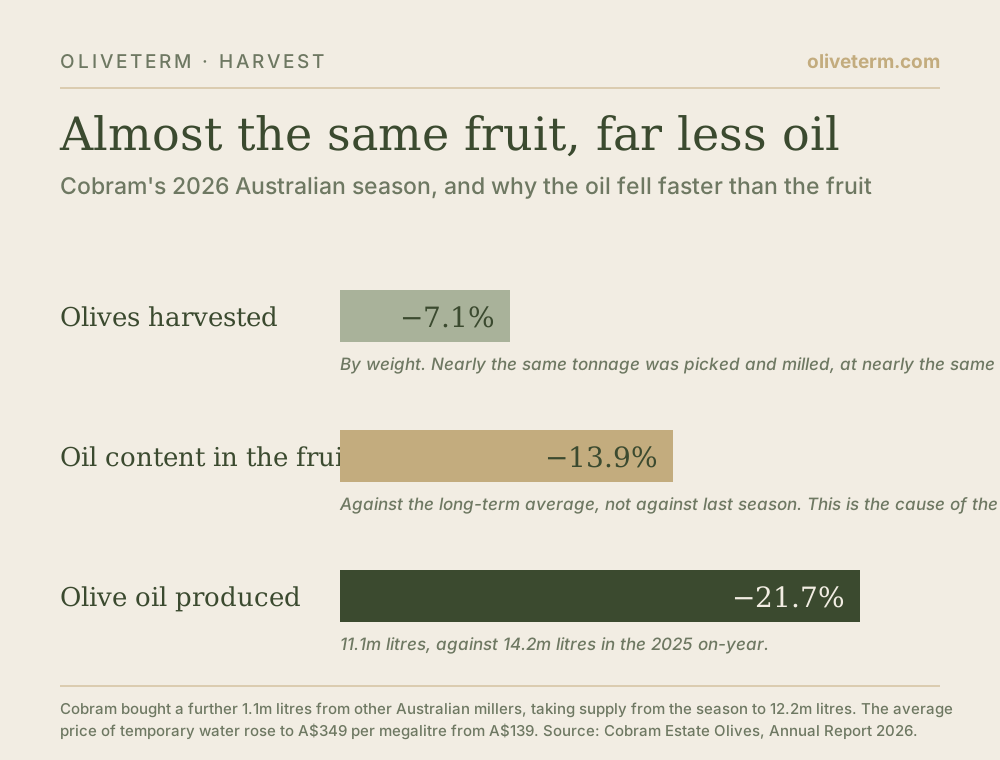
Cobram bought 1.1 million litres from other Australian millers to take available supply from the season to 12.2 million litres. These final figures revised the July estimates of 0.8 million and 12.1 million litres. The extra purchases helped protect bottled-oil supply, while contributing A$10.6 million to the year-on-year reduction in operating cash flow.
Water added further pressure. The average price of temporary water rose from A$139 to A$349 per megalitre, and temporary-water purchases accounted for A$8.3 million of the cash-flow decline.
At 30 June, part of the crop was still on the trees, so accounting rules required Cobram to estimate the value of those unharvested olives and include the movement in FY2026 earnings. Fruit picked before 30 June entered inventory at its value on the harvest date, while fruit picked in early July entered inventory in FY2027 even though the standing crop had already been valued at year end.
Cash flow shows the immediate cost of the US strategy
Profit and cash are different measures. Profit includes accounting estimates and costs that may be paid in another period, while cash flow records the money that actually entered and left the business. Cobram generated A$47.5 million from operations before interest and tax, but only A$3.4 million remained after those payments, compared with A$58.1 million a year earlier.
The company then spent A$102.3 million on groves, land, equipment and other fixed assets. It also recorded an A$159.7 million cash outflow for the COR acquisition. These payments, together with the weaker Australian cash generation, lifted net debt from A$263.9 million to A$437.3 million despite raising about A$180 million from shareholders. Net debt is the company's total borrowings after subtracting the cash it holds.
The US$173.5 million headline price for COR combined several forms of payment. Cobram paid part in cash and gave the sellers vendor notes, which are effectively promises to pay over time. The transaction also included warrants linked to Cobram's share price and a possible US$15 million later payment tied to COR's profit. The Annual Report valued the final provisional consideration at A$245.1 million, while the A$159.7 million cash-flow figure represents the cash paid after deducting the cash acquired with COR. The gap between the headline price and the provisional consideration reflects the accounting value placed on the notes, the warrants and the contingent payment, not a movement in the exchange rate. No later payment became due because COR missed the required performance level.
Cobram has also claimed a purchase-price adjustment of up to US$31.9 million from the sellers over the quantity of bulk olive oil held when the deal closed. The sellers dispute the claim in full and the issue remains in a legal process.
After year end, the company declared a fully franked dividend of 4.5 cents per security, unchanged from FY2025. The payment, due on 6 November, amounts to about A$21.5 million across roughly 479 million securities. It follows a year in which operating cash after interest and tax was A$3.4 million and net debt rose by A$173.4 million.
Acquisition accounting produced most of the reported loss
Cobram's underlying business recorded A$13.0 million of normalised earnings before tax. Acquisition, impairment and warrant charges then reduced the reported result before tax to a loss of A$37.7 million. A tax benefit brought the final loss down to A$4.2 million.
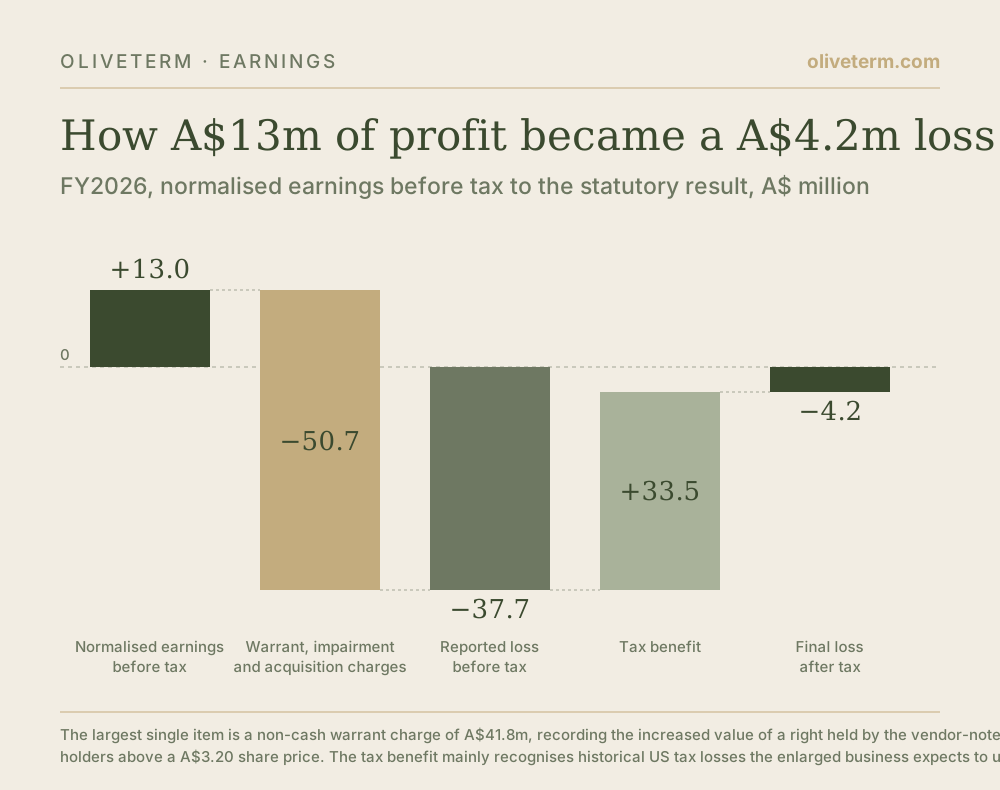
| From underlying earnings to the reported loss | A$m |
|---|---|
| Normalised earnings before tax | 13.0 |
| Warrant, impairment and acquisition charges | −50.7 |
| Reported loss before tax | −37.7 |
| Tax benefit | +33.5 |
| Final loss | −4.2 |
The largest adjustment was an A$41.8 million non-cash warrant charge. The vendor-note holders received a right to benefit if Cobram's share price rose above A$3.20, and accounting rules required the company to record the increased value of that right as an expense. It consumed no cash during FY2026. The A$33.5 million tax benefit mainly recognised the future value of historical US tax losses that Cobram now expects to use against profits from the enlarged American business.
The share fall also reflected high expectations
Cobram's share price at 30 June was 91% above its level a year earlier. At that point investors were paying almost A$33 for every A$1 of forecast annual earnings, compared with about A$14 across the Australian food sector. The weaker earnings and cash result therefore triggered a reduction in expectations as well as a reaction to the business itself.
Cobram's results expose pressures across the wider olive oil market
Cobram publishes a level of financial detail that is rare among large integrated olive oil producers, and rarer still alongside the sector's other listed filings. Its accounts show how changes in crop yield, water, oil procurement, retail pricing and investment eventually reach profit, cash and debt.
The Australian supermarket olive oil category fell 2.6% by value as global supply recovered and imported brands returned to heavier promotion. The US category fell 6.6% by value in the 52 weeks to 13 June while volumes increased. This is the same sequence now visible in Europe, where origin prices have fallen a long way from their 2024 peaks and retailers and brands can compete more aggressively on price. Deoleo, the largest bottler in the industry, reported the mirror image at its half year: sales down as prices normalised, but EBITDA up by half as margins recovered.
Cobram Estate and Red Island still held 35.7% of Australian supermarket sales by value, and Cobram Estate brand sales rose 2.1%. That brand position was insufficient to offset the effect of low oil content, a smaller harvest and higher water costs. Producers and cooperatives without a strong consumer brand have even less ability to absorb those agricultural pressures elsewhere in the chain.
The A$8.3 million water effect gives a cash value to a risk that European producers often carry through irrigation allocations, pumping costs and water infrastructure. The A$130 million invested in assets still awaiting income provides a second reference point for intensive and super-intensive planting projects. New groves consume capital for several years before mature production arrives, while the market price available when that oil reaches consumers remains outside the grower's control.
FY2027 must show that the US platform can begin paying for itself
Cobram expects higher EBITDA and operating cash flow in FY2027, supported by a larger Australian on-year harvest and twelve months of COR ownership. The company says most of the first US$12 million of annual synergies has been implemented and should be largely reflected by the end of FY2027. It is targeting about US$20 million a year by FY2030 through better yields, lower production costs and operational savings.
The central test is straightforward. The larger US business must turn its brands, grower network and maturing groves into more cash, while the Australian on-year harvest rebuilds group earnings and debt stops rising at the same pace. Cobram now owns most of the pieces it wanted in California. FY2027 will begin to show how well those pieces work together.
Sources
- Cobram Estate Olives, Annual Report 2026, 28 August 2026.
- Cobram Estate Olives, FY2026 Full Year Results Presentation, 28 August 2026.
- Cobram Estate Olives, Appendix 4E, 28 August 2026.
- Cobram Estate Olives, Australian Harvest and Business Update, 7 July 2026.
- Cobram Estate Olives, Business Update and Acquisition of California Olive Ranch, 24 December 2025.
- European Central Bank, euro foreign-exchange reference rates, 28 August 2026.
- StockAnalysis, Cobram Estate Olives valuation data.
- Simply Wall St, Australian food industry valuation data.