

For the past two seasons, one trade needed very little explaining: Spanish oil was expensive, Tunisian oil was cheap, and anyone with the logistics to move volume across the Mediterranean could earn the difference. It was never a sophisticated play. The gap was simply there, and the market took it.
That gap has now effectively closed.
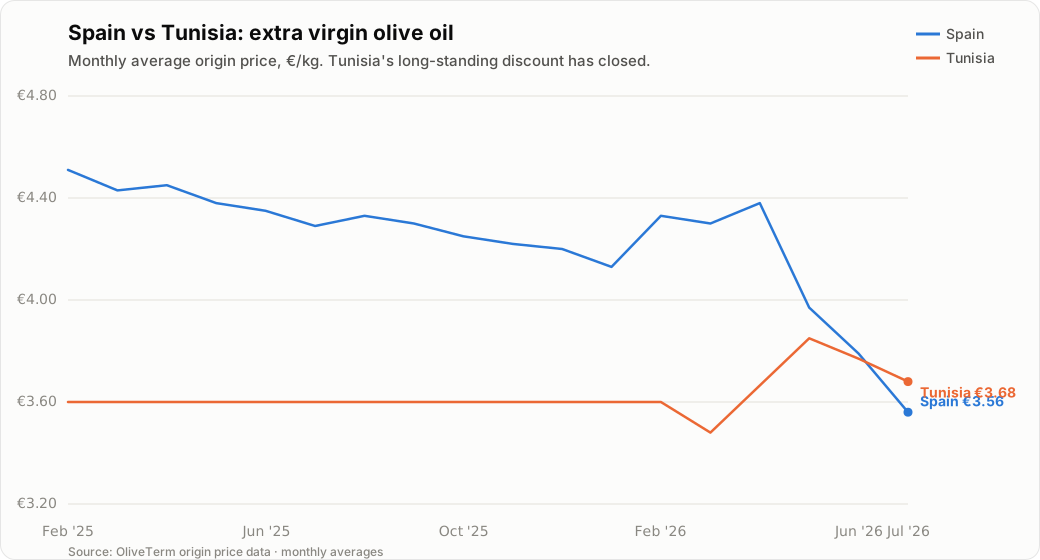
The original logic was straightforward enough. Through the drought-hit campaigns, Spain's harvests came in short season after season and prices climbed to levels the trade had rarely seen. Tunisia, holding ample oil and far less pricing power, sat at a persistent discount. Its olive oil traded well below the comparable Spanish product, wide enough to absorb freight, duties and handling and still leave a clean margin. So the oil moved north, as it tends to when the numbers align.
What has changed is that the numbers stopped aligning, and from both sides at once. Spanish quotations eased back from their extraordinary highs as the harvest outlook steadied and inventories were rebuilt; the momentum behind the spike had little left to sustain it. At the same time, Tunisian oil firmed. Export demand held, the campaign delivered on quality, and Tunisian sellers, having watched others capture the margin on their oil for two years, grew far less willing to price at a discount.
Together, those forces have brought the two origins close to parity. On a comparable basis they now quote near enough that the spread no longer covers the cost of executing the trade. Once the gap falls below the all-in cost of moving the oil and carrying the position, the arbitrage ceases to exist in any meaningful sense: what remains is two origins quoting broadly similar prices.
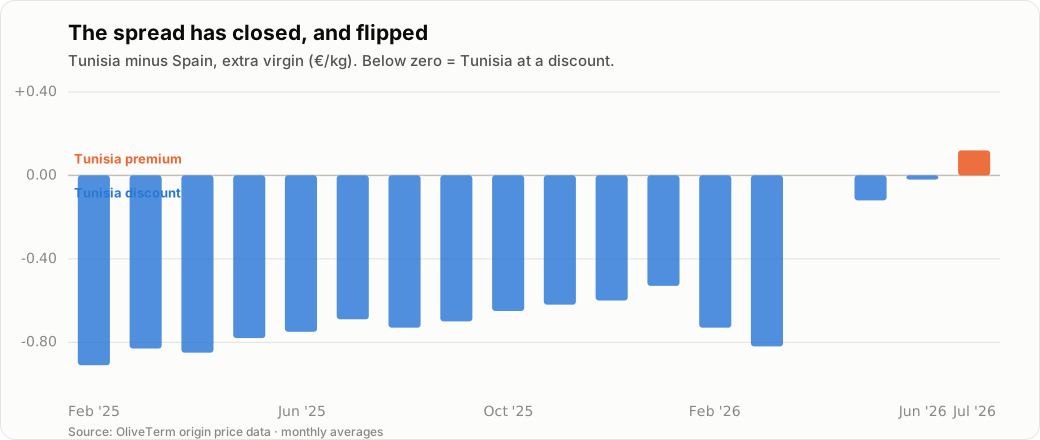
This is a more constructive picture than a simple loss of opportunity suggests. A narrow spread points to a market that prices oil on its actual merits: quality, consistency, certification, the reliability of the counterparty. It is no longer paying up for origin alone. For buyers, the decision shifts back toward fundamentals, which is where it belongs. For Tunisia, the change matters more than the numbers imply: its oil is increasingly valued on its own standing rather than treated as a lower-cost substitute.
So where does it go from here? The honest answer is that this looks more like two lines crossing than a lasting settlement. Spain is still the price-setter for the whole complex, and Tunisia still tracks it with a discount that widens and narrows over time. What has closed is that discount, not Tunisia's dependence on it, and a basis that has fallen to zero is just as capable of opening back up.
The base case, then, is not a fixed parity but a return to a modest Tunisian discount in normal years: narrower and more volatile than the wide gap of the drought era, and driven far more by the harvest than by geography. When Tunisia carries a large crop and needs to clear volume, the discount reopens. When Spain is well supplied and Tunisia's better oil is in demand, the two meet or even invert, much as they have now. The extremes of the past two years are unlikely to return unless one side is badly short or badly long, but a spread pinned neatly at zero is just as unlikely to hold.
What would make convergence durable is structural rather than seasonal: Tunisia continuing to move up the value chain, more bottled and branded oil, more organic and protected-origin volume, and more sales beyond the European market. That is the path that turns a good season into a lasting re-rating, and it is measured in years, not months. Until then, the sensible watch list is the same short one that has always moved this market: the size of the next crop on both shores, the alternate-bearing swing of the trees, EU quota policy, and the euro. The arbitrage may be gone, but the relationship between these two origins is far from settled.