

For a brand built around an early-harvest oil, picking date is part of the product. For a bulk supplier, its value depends on the buyer's requirements and the return available from the crop.
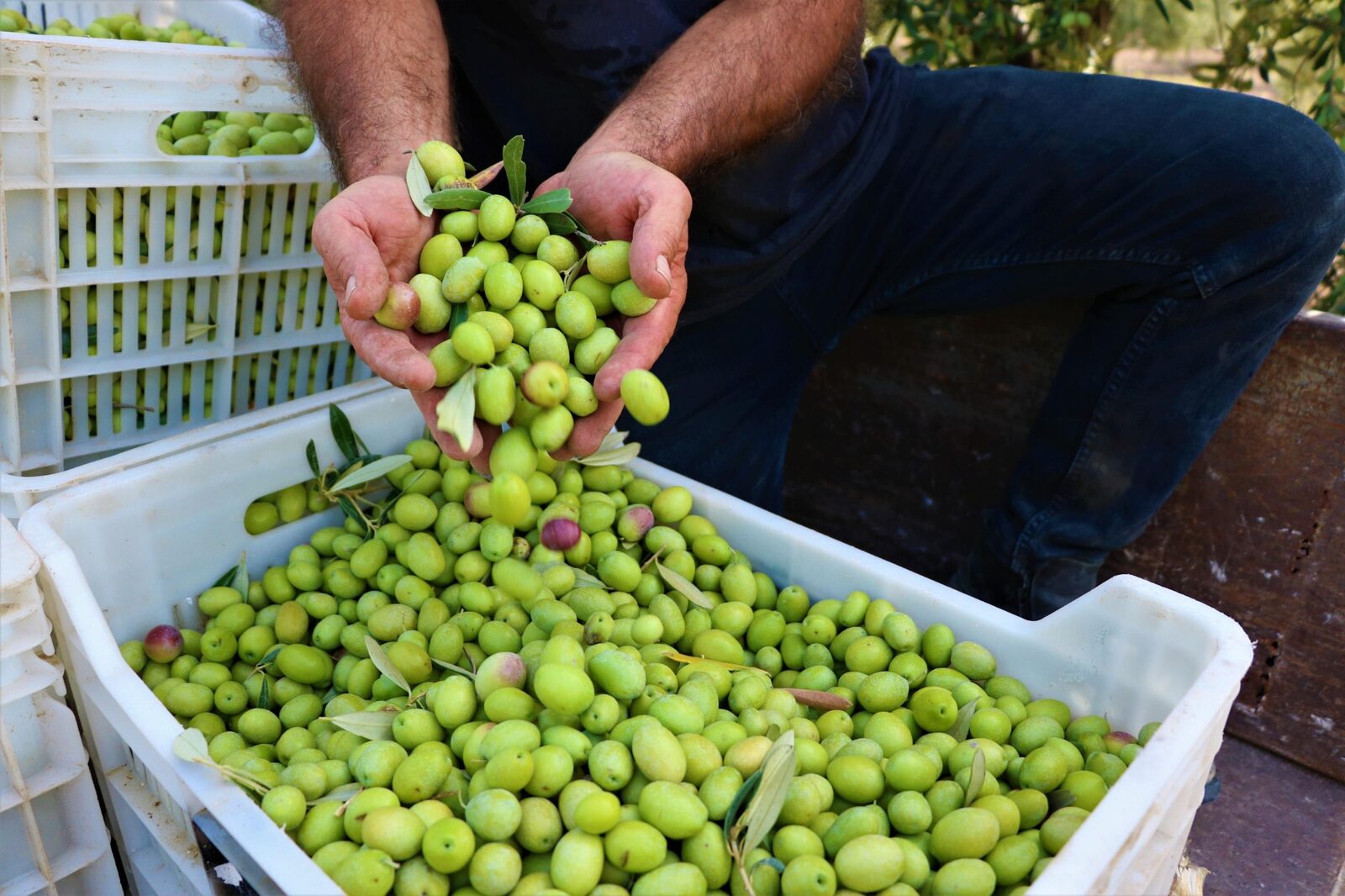
Image source: VOREAS
For a company whose customers expect a distinctive early-harvest oil, the timing of the crop is already part of its commercial strategy. Allowing the olives more time to accumulate oil may change the character on which the product's price and reputation depend. The business still has to earn a satisfactory return, but its harvesting decision must also deliver what it has promised to sell. The question becomes how to produce that oil profitably, and how much of it the market will take.
An operator supplying bulk oil has a different set of commitments. Its harvest needs to meet the specifications of its buyers at a cost that leaves an acceptable margin. Earlier picking may help secure a better price, protect the required quality or avoid losses in the field. Where those benefits fail to compensate for any additional costs and forgone output, there is little commercial reason to pursue an early harvest for its own sake. The relevant target is the best return from the crop within the requirements of the business.
Both models seek profit. Their difference lies in how they earn it and the product they need to deliver. A brand built explicitly around early harvest has made that characteristic part of its proposition. Premium positioning more broadly can draw on origin, variety, distinctive flavour and the identity of the estate. CBI's guide to the European olive oil market describes buyers seeking different flavour intensities, alongside specialised importers serving premium and single-origin markets. A producer needs to define which of those attributes its customers value before deciding how to obtain them. The connection between harvesting and positioning is visible in established brands. Spain's Castillo de Canena describes its Reserva Familiar Picual as an early-harvest oil made from green olives, with the company deliberately accepting a lower oil yield to obtain the character it seeks. Oro del Desierto, also in Spain, describes selecting and blending its first oils from Arbequina, Hojiblanca and Picual to produce its Coupage, adjusting the proportions to maintain the desired balance between seasons. These are examples of harvesting and selection serving a defined product.
What the grove gives up
There is no standard extraction penalty for early harvest that holds across the Mediterranean; the cost has to be established locally. Comparing yields from early and later harvests is difficult, as several factors influence how much oil is ultimately recovered. Water alone can distort the comparison. As an olive loses moisture, oil can account for a larger share of its fresh weight without a corresponding increase in the amount of oil inside it. A higher percentage may therefore coincide with less fruit weight to deliver to the mill. Research published in Grasas y Aceites in 2016 examined oil content on a dry-matter basis to help monitor accumulation without the distortion from changing moisture, while stressing the influence of local growing conditions. The useful economic measure is the saleable oil recovered from a comparable area of grove. Laboratory oil content describes what the fruit contains, while recovery also depends on processing. Research involving the University of California, Davis has shown that crushing settings and the time spent mixing the olive paste interact to affect extraction efficiency and composition. A difference between two mill yields cannot automatically be attributed entirely to the date of picking.
The quality response also varies. A study of Empeltre olives in an irrigated orchard at Alcañiz, in Spain's Aragón region, followed the 2017, 2018 and 2019 seasons and found greater stability and higher phenolic content with earlier harvesting under those conditions. The season itself was a major influence on several characteristics. A separate study, published in 2025, compared Edremit olives picked in October and December 2021 from the same orchard in western Türkiye and processed at the same industrial mill. The earlier oil had stronger green-fruity, bitter and pungent attributes, while the later oil contained more biophenols. Neither showed sensory defects. Harvest timing therefore needs to be linked to the particular attributes sought, with each study understood in its own setting.
Waiting also carries production risks. Research on Barnea, Coratina and Picual in the hot conditions of Israel's Jordan Valley found continued oil accumulation followed by substantial losses through fruit drop towards the final harvest date. For a grower facing similar losses, an earlier harvest could protect saleable volume. The choice is not always between less oil now and more oil later; it depends on how much of the potential crop can actually be collected.
What the bottle returns
Once the likely agricultural outcome is understood, the appeal of premium bottling is easy to see in the prices displayed to consumers. A check of Spanish producers' own online shops on 5 October 2026 found the following offers:
| Product | Format | Displayed price | Equivalent per litre, calculated |
|---|---|---|---|
| Oro del Desierto Coupage, listed as 2025/26 harvest | 500 ml | 15.50€ | 31.00€ |
| Castillo de Canena Reserva Familiar Picual | 500 ml | 21.90€ | 43.80€ |
| Castillo de Canena Primer Día de Cosecha Picual | 500 ml | 25.50€ | 51.00€ |
Selected storefront asking prices, with delivery charges and any checkout adjustments excluded from the comparison. These are examples of positioning, not a market average, wholesale quotations or evidence of completed sales. The per-litre figures are arithmetic conversions of the displayed bottle prices.
For a producer considering a premium line, the calculation has to work backwards from the revenue the company would actually receive. A retailer's shelf price is not necessarily the producer's invoice price. Selling directly can retain more of that revenue within the company, but brings the work and expense of acquiring customers, packing orders and delivering them. Packaging, sales commissions, promotion, fulfilment and stockholding all reduce the amount left to reward the agricultural product. The relevant costs depend on the route to market. That remaining return must then be assessed against what the same grove could have earned under the alternative harvest and sales plan. The producer's own oil has an alternative value if sold in bulk, which matters when deciding whether to commit it to a bottled programme. Where early picking also reduces saleable output, the bottled programme must compensate for that reduction as well as its additional expenses. A high margin on an individual bottle can coexist with a disappointing result from the area of grove committed to producing it.
The volume assumption is especially consequential. Development of the brand, commercial staff and other continuing expenses have to be supported by the bottles actually sold. A planned selling price becomes much less useful if it depends on moving a volume for which the company has no established customers. The published shop prices above provide references for an offer to consumers; a viable business plan needs realistic estimates of the company's own net receipts, costs and sales. There is no single retail price at which premium positioning becomes profitable for every producer.
The same arithmetic in bulk
For a bulk supplier, the same discipline applies at the level of the lot. A buyer may be willing to pay more for a particular green-fruity profile or other specified characteristics. That opportunity should be assessed against the extra expense and any reduction in recovered oil. Where the available offers do not reward those characteristics sufficiently, the operator has reason to choose the harvest that delivers the best commercial result while meeting the required grade and specifications. Bulk supply can include highly differentiated oils.
In a hypothetical bulk comparison, 10 tonnes of standard extra virgin sold at 3.50€/kg would bring in 35,000€. If an earlier harvest from the same grove produced eight tonnes of premium oil, selling at 4.50€/kg would bring in 36,000€, while 5€/kg would bring in 40,000€. With other costs unchanged, the early harvest would improve the return only if its extra harvesting and processing costs stayed below 1,000€ in the first case or 5,000€ in the second.
What the mill asks of growers
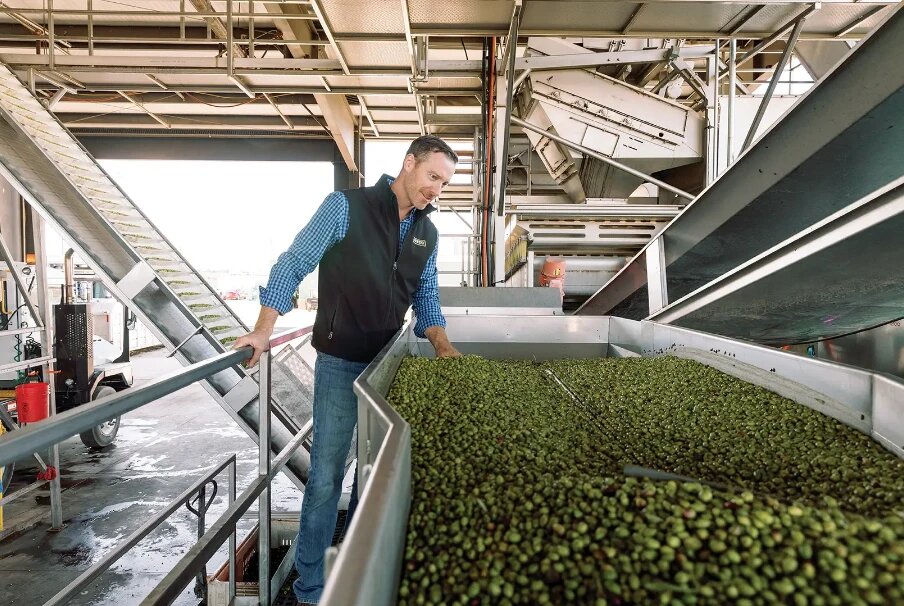
Image source: Corto Olive Oil
For a mill seeking a distinctive oil, purchasing standards need to be as deliberate as the choice of processing equipment. Growers should know before the campaign what fruit the mill is prepared to buy: the varieties and maturity required for the intended oil, sound fruit picked from the tree, limits on damaged fruit and foreign material, and agreed handling and delivery arrangements. UC Davis guidance identifies healthy fruit, minimal harvesting damage and prompt processing as foundations of quality, and advises against using olives collected from the ground for high-quality extra virgin oil. Asking for an early harvest therefore needs to be accompanied by an assessment of the fruit that actually arrives.
Those conditions need to be enforced at reception. A mill should inspect and identify incoming loads, take representative samples and keep unsuitable fruit out of the selected programme. That means being prepared to reject a delivery under the agreed terms, or buy and process it separately for a different product. The IOC's mill guidelines recommend recording the supplier, variety and condition of each delivery, and separating olives for processing according to quality.
A mill that rewards compliant and substandard deliveries equally weakens the incentive to meet its requirements. Keeping selected fruit separate also protects the value of the additional work requested from growers.
The price structure should distinguish between sound fruit that meets the mill's normal requirements and the additional work needed for a particular product. Earlier picking, stricter selection or smaller, coordinated deliveries may impose costs that growers will not recover through a flat price per kilogram. A mill can address that through a premium agreed in advance for qualifying deliveries, with clear sampling and assessment procedures, or through another purchasing arrangement that makes the requested practices worthwhile. The grower should be able to understand the return before changing the harvest plan. Where payment depends partly on the resulting oil, the terms also need to recognise that extraction and subsequent handling are the mill's responsibility.
The mill must also be able to handle the fruit it asks growers to deliver. Harvest schedules and intake bookings should match processing capacity, with lots kept separate and delays controlled. Poor ventilation, heat and prolonged waiting can promote fermentation. Paying for carefully harvested olives and then leaving them in a queue undermines the commercial case for selecting them.
Deciding block by block
These assessments improve when records connect individual blocks to harvest dates, fruit condition, actual oil recovery and realised sales over several campaigns. Offers must also be compared on similar delivery and payment terms. A lot sold before a general market decline may earn more partly because of when it was sold, which is a different benefit from a premium paid for its characteristics. Neither a favourable season nor a successful first release establishes what the business can earn consistently.
A company can consequently have good reasons to reserve selected blocks for a premium line while selling the remainder in bulk. The first orders can justify a particular allocation without justifying the same treatment for the whole estate. Expanding the early-harvest programme then requires buyers for the additional volume at prices that cover its full commercial cost. The price achieved on an initial release becomes a useful reference for that decision once the business knows how much it retained and whether customers will buy again.
Sources
- CBI: Entering the European market for olive oil (buyers seeking different flavour intensities, and specialised importers serving premium and single-origin markets; updated 25 March 2026)
- Castillo de Canena: Reserva Familiar Picual, 500 ml (an early-harvest oil from green olives, with a lower oil yield accepted for its character; shop price checked 5 October 2026)
- Oro del Desierto: Coupage (selection and blending of the first oils from Arbequina, Hojiblanca and Picual; checked 5 October 2026)
- Zipori et al.: Oil content on a dry-weight basis and harvest timing, Grasas y Aceites, 2016 (oil accumulation monitored without the distortion of changing moisture)
- Polari et al.: Crushing variables, malaxation and extraction efficiency, European Journal of Lipid Science and Technology, 2018 (crushing settings and malaxation time interact in extraction efficiency and composition)
- Rey-Giménez and Sánchez-Gimeno: Crop year, harvest date and oil stability in Empeltre olives, Journal of the Science of Food and Agriculture, 2022 (Alcañiz, 2017 to 2019: stability and phenols with earlier harvest, and the weight of the season)
- Yilmaz and Aydin: Early and normal harvest oils compared under industrial conditions, European Journal of Lipid Science and Technology, 2025 (Edremit olives picked in October and December 2021 and processed at the same mill)
- Dag et al.: Harvest timing under the hot conditions of Israel's Jordan Valley, European Journal of Lipid Science and Technology, 2014 (continued oil accumulation and fruit drop in Barnea, Coratina and Picual)
- Oro del Desierto: Coupage, 500 ml, 2025/26 harvest (shop price checked 5 October 2026)
- Castillo de Canena: Primer Día de Cosecha Picual, 500 ml (shop price checked 5 October 2026)
- UC Davis: Olive Oil Quality (healthy fruit, minimal harvesting damage and prompt processing; olives from the ground; ventilation, heat and waiting; updated 6 July 2023)
- International Olive Council: Quality Management Guide for the Olive Oil Industry: Olive Oil Mills (T.33/Doc. no. 2-4, 2006: recording the supplier, variety and condition of each delivery, and separate processing by quality)
The per-litre figures in the table and the bulk comparison are arithmetic from the prices shown; the bulk comparison is hypothetical.