

The European Union has approved a major change to the way farmers sell agricultural products, making written contracts the general rule across the bloc. But despite some coverage suggesting otherwise, the obligation is not yet in force and will not begin to apply until two years after the new regulation enters into force.
The reform has now cleared both European institutions. Parliament approved the final agreement in June, followed by the Council on 29 June, completing the legislative process.
What has not happened yet is publication in the Official Journal. That distinction matters. The final text says the regulation will enter into force twenty days after publication, while the provisions introducing the new contract rules will only apply two years later.
In practical terms, businesses have plenty of time to prepare. But the direction of travel is now settled.
Written contracts become the default
Under the new Article 168 of the EU's Common Market Organisation Regulation, deliveries of agricultural products by farmers, farmers' associations, producer organisations and their associations to processors, distributors or retailers will, as a general rule, have to be covered by a written contract agreed before delivery.
The contract can be electronic and must set out the basic commercial terms: price, quantity and quality, delivery timing, duration, payment conditions, collection or delivery arrangements and provisions for force majeure.
Price is where the reform becomes more consequential.
A contract can still contain a fixed price. But where the price is calculated rather than fixed, the formula must use objective and understandable indicators or methods that reflect changes in market conditions as well as relevant changes in production costs affecting farmer remuneration. Quantity, quality and composition can also form part of the calculation.
That makes vague arrangements considerably harder to defend. A price formula needs to be capable of being understood and checked by both sides rather than simply referring to an undefined "market price" to be determined later.
Longer contracts also receive additional protection. Where a contract runs for more than twelve months, it must include a review clause that can be triggered by the farmer or producer organisation.
What this means for olives and olive oil
For the olive oil sector, the most obvious impact is on the relationship between growers and mills or other buyers of olives.
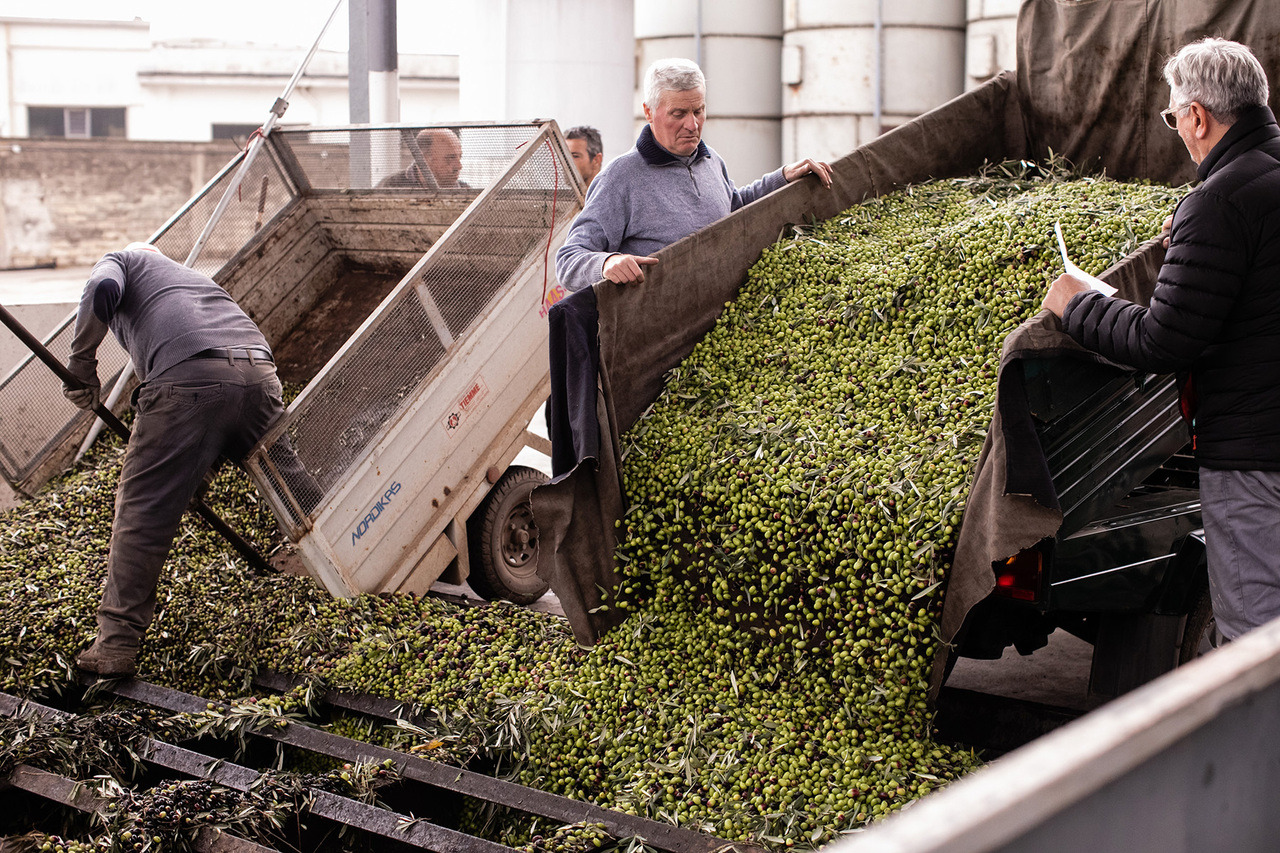
Where a farmer delivers olives to a processor as part of a sale, the new EU framework points towards a written agreement established before delivery, with the price and other commercial conditions defined in advance.
But the scope is slightly broader than simply the "first sale". The text also covers farmers who process products produced on their own holdings. A grower processing his own olives and subsequently supplying the resulting product to a distributor or retailer can therefore also fall within the contractual framework.
Cooperatives remain an important exception. A member delivering produce to his own cooperative does not need a separate written contract where the cooperative's statutes already contain transparent, democratically agreed rules, known in advance, for determining prices and payment conditions.
That condition matters. The exemption is not simply granted because an organisation calls itself a cooperative; the internal rules have to provide the required transparency.
There is also more flexibility than some of the early headlines suggest. Member states will be allowed to create exemptions in several cases, including purchases by micro or small businesses, transactions below a national threshold of no more than 10.000€, deliveries paid essentially at the time of delivery, and products affected by seasonal supply, perishability or traditional selling practices.
That last point could prove particularly relevant to olives. How individual olive producing countries use those exemptions will determine how widely the new requirement is felt during the harvest.
A two-year transition, not an immediate obligation
The reform is therefore significant, but it is not a rule that mills or farmers suddenly need to comply with this summer.
The regulation first has to be published in the Official Journal. It will enter into force twenty days later, and the provisions governing these agricultural contracts will then have a two-year transition period before they begin to apply.
There is good reason for operators to start looking at their purchasing arrangements before then. Pricing formulas, cooperative statutes and the way growers and mills document deliveries may all need adjustment.
But there is an equally important distinction between preparing for a law and being legally bound by it.
For the olive oil industry, the next question is no longer whether Brussels will introduce written contracts. That decision has effectively been made. The question is how Spain, Italy, Greece, Portugal and other producing countries will use the flexibility left to them, particularly the exemptions for seasonal products, small transactions and smaller buyers.